🇨🇦 Miluvee Official Website 🇨🇦

When spring air becomes hard to breathe. The hidden struggle of pollen season in North America
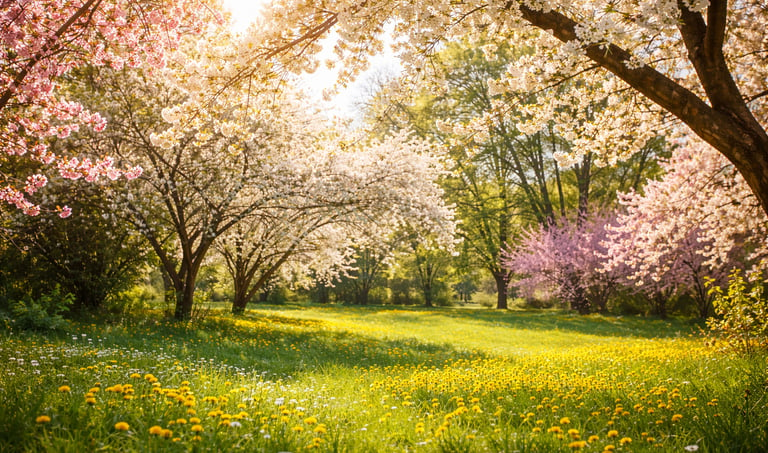
Every year, when spring arrives in Canada and the United States, people look forward to longer days, warmer sunlight, and the feeling of fresh air after months of winter. Windows open again. Parks become green. The air feels alive. But for millions of people, this season also brings something else — something invisible that quietly makes everyday life uncomfortable.
Vincent N. | Product Manager | @Miluveeca
2/20/2026


Every spring the stories sound the same. People say they wake up with a blocked nose even though their home is clean. They say their eyes burn for no reason. They say they feel tired all day, even after sleeping eight hours. Many of them already take allergy pills. Some take them every single day. Yet the symptoms keep coming back.
According to health data in North America, seasonal allergies affect tens of millions of people each year, and the numbers continue to rise. In the United States alone, more than 80 million people experience allergic rhinitis. In Canada, allergy rates have been increasing steadily over the past decade, especially in urban areas where pollen mixes with dust and pollution in the air. Scientists also report that pollen seasons are becoming longer because of climate change, meaning people are exposed to allergens for more weeks every year.
The problem is that pollen is incredibly small, and it travels everywhere.
What is pollen?
Pollen is released by trees, grass, and plants as part of their natural life cycle. In spring, trees release massive amounts of pollen into the air, often so much that cars turn yellow overnight. These particles are light enough to stay in the air for hours, and small enough to pass through windows, doors, clothing, and ventilation systems. Even if your home looks perfectly clean, the air inside may still contain pollen.
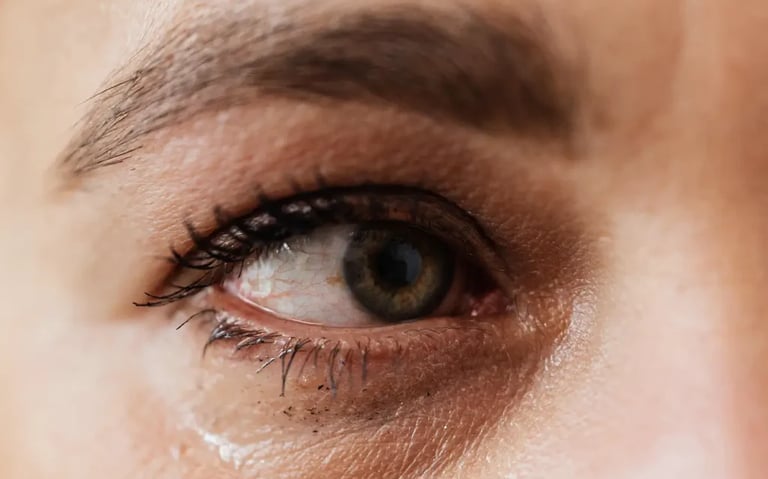
For some people, pollen does nothing at all. But for others, the immune system reacts as if the body is under attack. When pollen enters the nose or throat, the body releases histamine, a chemical that causes inflammation. This is why people start sneezing again and again. This is why the nose feels blocked at night. This is why eyes become itchy, the throat feels dry, and sleep becomes shallow.


Many people believe the solution is medication
And medication can help. Antihistamines reduce the reaction, and nasal sprays calm the inflammation. But these treatments do not remove pollen from the air. They only make the body react less. That is why so many people tell us the same thing: the pills work for a few hours, then the symptoms come back the next morning.
We hear this especially from people over forty, who say that allergies seem worse now than when they were younger. Doctors explain that the immune system changes with age, and long-term exposure to allergens can make the body more sensitive. In other words, the longer you live in an environment with pollen, dust, and pollution, the more your body may react to it.
This is the moment when many people start looking beyond medicine and begin asking a different question: what if the problem is not my body, but the air I breathe every day?
Large air purifiers became popular for this reason.
They can remove particles from the air, and for many families they make a real difference. But we also hear the same frustrations again and again. Some machines are loud at night. Some require expensive filter replacements. Some are too big for a small bedroom or apartment. Some people simply want something simpler, something they can use quietly every day without thinking about it.
That is exactly the situation that led to the creation of the Miluvee air ionizer.
As product manager, I did not start with technology. I started with the same question our customers ask: why does the air feel different in the mountains, near the ocean, or after rain? Why does breathing feel easier in those places, even for people with allergies?
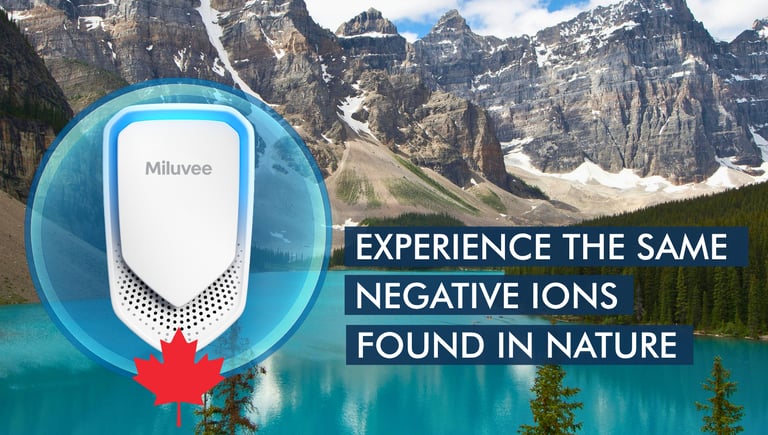
Scientists have studied this for years, and one of the reasons is the presence of negative ions in natural environments. Forests, waterfalls, and fresh outdoor air contain higher levels of these charged particles, and many people report that the air feels cleaner and lighter in those conditions. We wanted to bring that feeling into everyday living spaces, especially during seasons when the air outside carries pollen.
The Miluvee ionizer was designed for real life, not for a laboratory.
It is small because most people need cleaner air close to where they sleep. It is silent because night is when breathing problems feel worse. It has no fan and no filter because people do not want another machine that needs constant maintenance. The goal was not to replace medical treatment, and not to promise miracles, but to give people a simple way to make the air around them feel fresher every day, especially during pollen season.
Every spring we receive messages from customers saying the same thing: they did not realize how much the air in their bedroom affected how they felt in the morning. Some say they wake up less congested. Some say their sleep feels deeper. Some say they finally stopped running the purifier on high speed all night. These are small changes, but when you live with allergies every day, small changes matter.
"Spring will always be beautiful in North America. Trees will always release pollen, and the air will always carry things we cannot see. We cannot stop the season, and we cannot stop nature.
But we can change the environment inside our homes, and sometimes that is enough to make breathing feel easy again."
Miluvee Homecare
British Columbia, Canada
Contact
Newsletter
For support & inquires: support@miluvee.com
For sales & marketing: sales@miluvee.com
© 2025. All rights reserved.